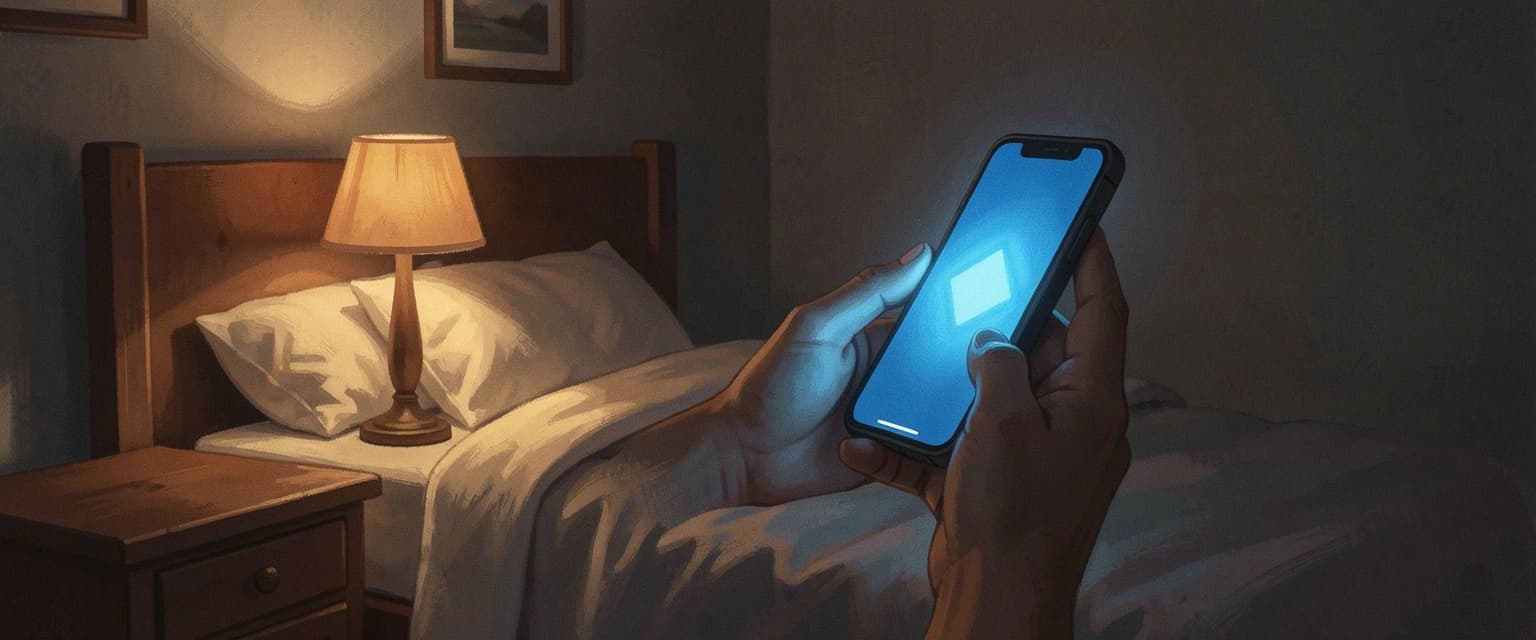
How Blue Light Affects Sleep
The screens we stare at for hours each day emit significant amounts of blue light — and this specific wavelength has a powerful, well-documented effect on your ability to fall asleep and stay asleep.
How Blue Light Suppresses Melatonin
Melatonin is the hormone your brain produces to signal that it is time to sleep. Production normally begins in the evening as natural light dims, peaking in the hours before midnight. Blue wavelengths of light — centered around 480 nanometers — are the most potent suppressors of melatonin production because they activate specialized photoreceptors in the retina called intrinsically photosensitive retinal ganglion cells (ipRGCs).
When these receptors detect blue light, they send signals directly to the suprachiasmatic nucleus, your master biological clock, telling it that it is still daytime. Your brain responds by delaying or reducing melatonin production.
The Harvard Research
Researchers at Harvard Medical School conducted controlled studies comparing the effects of blue light to green light of comparable brightness. They found that blue light suppressed melatonin for about twice as long as green light and shifted circadian rhythms by up to 3 hours. This means that a late-night screen session does not just make it harder to fall asleep tonight — it shifts your entire internal clock forward, making the next several nights more difficult as well.
A separate study found that participants who read on a tablet before bed took longer to fall asleep, had less REM sleep, felt sleepier the next morning, and showed reduced melatonin levels compared to those who read a printed book.
Practical Solutions
- Stop screen use 30 to 60 minutes before bed: This is the single most effective intervention. Replace screen time with reading, gentle stretching, or listening to audio.
- Enable night mode: Most devices now offer a warm-shift setting that reduces blue light emission after sunset. While not as effective as avoiding screens entirely, it meaningfully reduces exposure.
- Dim your environment: After sunset, switch from bright overhead lights to warm-toned lamps at lower brightness. Smart bulbs that shift to amber or red tones in the evening are ideal.
- Use blue-light-filtering glasses: Amber-tinted lenses block the most disruptive wavelengths. Studies show they can improve melatonin production even with screen use.
- Replace screens with audio: Instead of scrolling or watching shows before bed, switch to sleep sounds, podcasts, bedtime stories, or calming music. This eliminates blue light entirely while still providing entertainment.
Building a Low-Blue-Light Evening
The goal is to create an environment that mimics the natural dimming of sunset. Warm, low lighting combined with audio-based relaxation is the ideal combination. Sorat makes this easy — start playing calming sounds or a bedtime story when you put your phone face-down for the night.