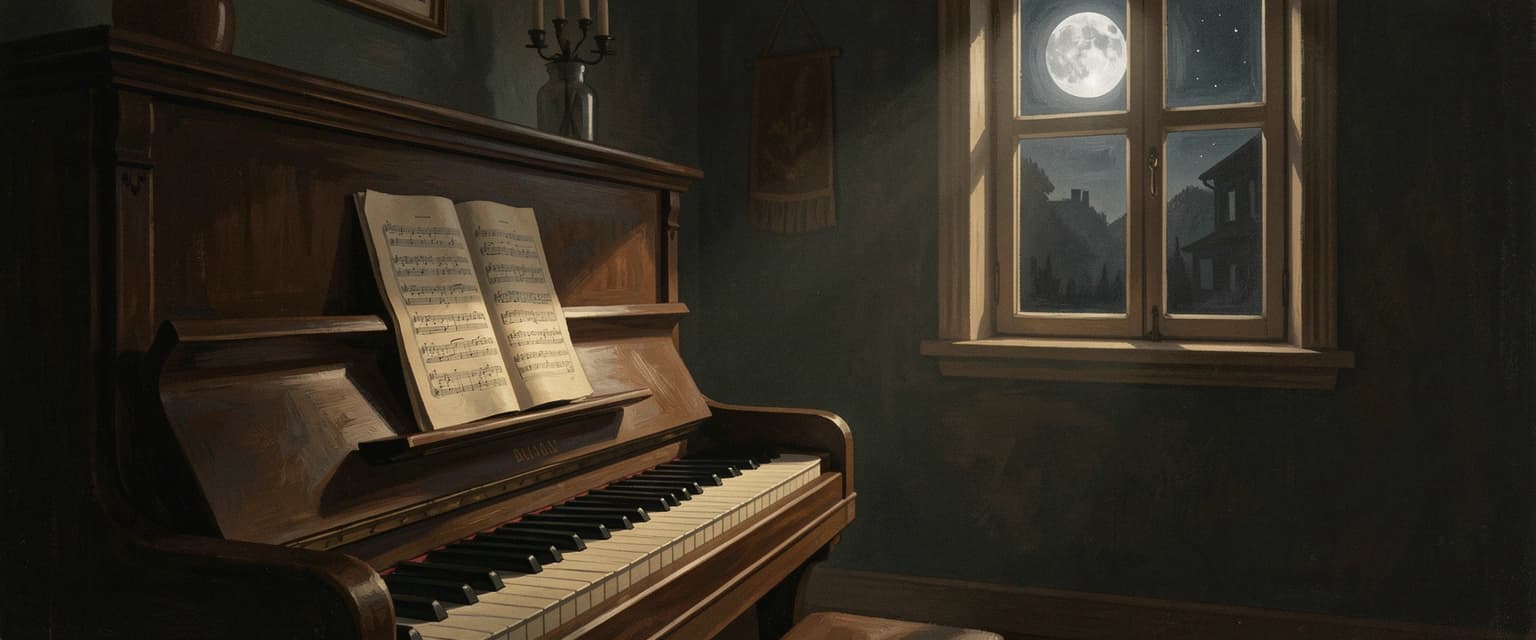
Piano Music for Sleep: Why It's So Effective
The piano is the most popular instrument for sleep music, and its unique acoustic properties explain why. No other instrument combines the piano's natural decay, harmonic richness, and cultural associations as effectively for promoting rest.
The Natural Decay Quality
When a piano key is struck, the resulting note is loudest at the moment of attack, then gradually fades toward silence. Each note appears and dissolves like a ripple on a pond. This built-in decay means piano music has a naturally calming energy profile — no note sustains with continuous force the way a violin or flute would. Your brain does not need to maintain vigilant attention because each sound is already in the process of disappearing.
This quality creates a gentle rhythm of emergence and dissolution that mirrors the process of falling asleep — a gradual letting go of wakefulness.
Harmonic Richness
The piano produces exceptionally rich harmonics. When you hear a single piano note, you are actually hearing a fundamental frequency plus dozens of overtones that give the instrument its warm, full character. This harmonic complexity makes piano sound satisfying and complete without being overwhelming. It engages the auditory cortex with enough complexity to prevent boredom but not enough to demand active processing.
Cultural and Psychological Association
Across many cultures, the piano is associated with calm, sophistication, introspection, and intimacy. Hearing solo piano in a quiet setting activates memories and associations related to comfort and reflection. These psychological associations amplify the acoustic effects — your brain expects to relax when it hears gentle piano, and this expectation helps make it happen.
Best Piano Pieces for Sleep
- Chopin's Nocturnes: Literally composed for the night. The Nocturne in E-flat, Op. 9 No. 2 is perhaps the most famous sleep music ever written.
- Satie's Gymnopedies: Minimalist, spacious, and floating. Long pauses between phrases give the brain room to drift.
- Debussy's Reverie: Impressionist harmonies that shimmer and shift like light on water. Dreamlike in the most literal sense.
- Bach's Goldberg Aria: Legend holds that Bach composed the Goldberg Variations to treat an insomniac count. The opening aria is gentle, methodical, and deeply peaceful.
- Ravel's Pavane: Stately and slow-moving, this piece creates a sense of time gently expanding.
Sorat features dozens of classical piano recordings and ambient piano sounds, all available to play on their own or layer with rain, nature sounds, or any other audio for your ideal nighttime atmosphere.